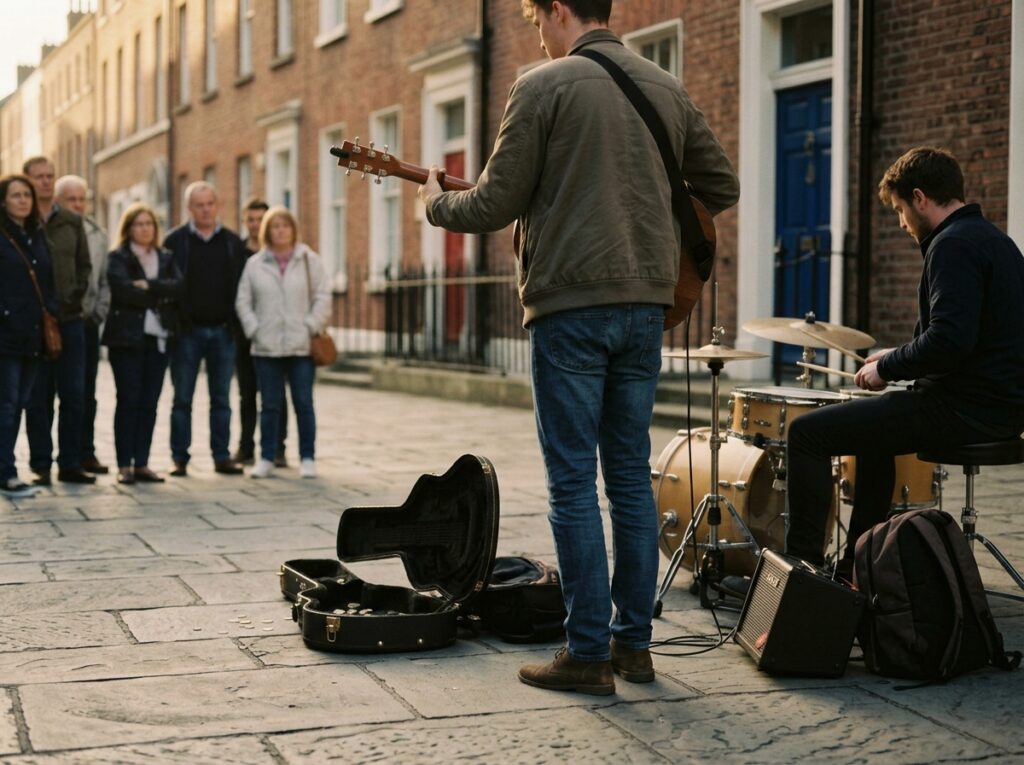
Three words, three different questions. "Modern rock" was about which radio stations played a record. "Alternative" was about what the music was meant to be an alternative to. "Indie" started out as a question of who owned the label, and slowly became a word for how a record sounds. Most rows about genre are two people answering different questions.
Modern rock: an American radio chart
Modern rock began life as a chart. Billboard launched Modern Rock Tracks in its issue dated 10 September 1988, compiled from airplay on fewer than 30 US stations, 18 of them commercial and the rest college radio. The first No.1 was "Peek-a-Boo" by Siouxsie and the Banshees, with the Psychedelic Furs and INXS alongside them.
The funny part is the headline Billboard ran that week, which announced a weekly chart of "Alternative Rock". So the two terms were tangled up from the very first issue. The chart itself was renamed Alternative Songs in 2009.
On this side of the Atlantic, "modern rock" never really caught on as a genre word. Stations here and in the UK went with other words. Dublin's Phantom 105.2 began as a pirate in the mid-1990s and won a 10-year licence in 2006 for an alternative rock service. It rebranded as TXFM in 2014, and its licence expired on 26 October 2016. In London, XFM relaunched as Radio X on 21 September 2015, describing its music as "fresh rock and guitar-based music".
Alternative: the outsider that won
Alternative was supposed to mean the stuff mainstream rock radio wouldn't touch. Then it took over. (There's a longer version of that story in What is alternative rock? A short history).
On the Billboard 200 dated 11 January 1992, Nirvana's Nevermind replaced Michael Jackson's Dangerous at No.1. It was the band's major-label debut. Their first album, Bleach, had come out in 1989 on the Seattle independent Sub Pop. Britannica describes alternative rock as the style that "dominated and changed rock between 1991 and 1996", and critic Chris Molanphy, writing for Pitchfork, put it more sharply. Alternative ended up as more than a rival to the middle of the road: "it became the road."
The Grammys tell the same story. At the 1991 ceremony the award was called Best Alternative Music Performance, and Sinéad O'Connor won it for I Do Not Want What I Haven't Got. She didn't attend or accept it, objecting to the industry putting commercial values ahead of art. At the 1994 Grammys, U2's Zooropa took the alternative album award, beating Nirvana's In Utero, R.E.M.'s Automatic for the People, Smashing Pumpkins' Siamese Dream and Belly's Star.
When one of the biggest bands in the world wins the alternative prize, the word has lost its original meaning.
Indie: a business model that turned into a sound
Indie has the tidier origin story. The UK Indie Chart launched on 19 January 1980 in Record Week. Its first singles No.1 was Spizzenergi's "Where's Captain Kirk?" and the first albums No.1 was Adam and the Ants' Dirk Wears White Sox. A record qualified if it came through independent distribution, meaning it wasn't distributed by a major label. From 21 June 2009 the test switched to ownership: the label had to be 50% or more owned by an independent company.
That's a business rule. It says nothing at all about guitars.
The sound crept in anyway. C86, a 22-track cassette of UK guitar bands compiled by NME in 1986 and later issued on vinyl by Rough Trade, became associated with jangly indie-pop, even though the tape itself was more varied than that reputation suggests. Fast forward and Merriam-Webster gives "indie" two senses: one about independent companies, the other about music "characterized by artistic freedom" and more unconventional than the mainstream.
Ireland has its own version: IRMA publishes a weekly Top 50 Independent chart.
Why the same band gets all three
Arctic Monkeys' releases, from their first single through The Car in 2022, are on Domino, which Music Week describes as an independent label. Their debut, Whatever People Say I Am, That's What I'm Not (January 2006), was the fastest-selling debut album in UK chart history at the time. Indie on paper, mainstream in every other sense.
Radiohead came at it from the other end. In October 2007 they released In Rainbows as a pay-what-you-want download from their own website, after their contract with EMI had ended. It went on to win Best Alternative Music Album at the Grammys on 8 February 2009.
The Grammys introduced a song-level Best Alternative Music Performance award for the 2023 ceremony, reusing the 1991 name, and Wet Leg, who are on Domino, won both alternative awards that year. At the 2026 Grammys The Cure did the double, with Songs of a Lost World and "Alone". Wet Leg and The Cure sharing a category tells you how wide that tent has become.
Why people still argue
Partly because each word still does a job. A label boss hears ownership; a fan hears a sound.
And partly because the bands at the top keep blurring the lines. Fontaines D.C. are the neatest current example. A Hero's Death, released on Partisan Records, got them a Best Rock Album nomination at the 2021 Grammys. Romance (2024) is on XL Recordings, a Beggars Group label, and Beggars describes itself as one of the largest independent groups of record labels in the world. At the 2025 Grammys they were nominated for Best Rock Album with Romance and Best Alternative Music Performance with "Starburster". They didn't win either, but rock and alternative in the same year is proof enough that the boxes overlap.
Here on The Arrow we'll play it and let you file it. Put on "Starburster" and try to decide which of the three boxes it belongs in. If your answer is "it's just a great rock song", you've settled it better than any chart ever managed.